
Legal Blackjack Sites for USA Players
Real money blackjack is legal online in seven American states, and the test is not where you live but where you are standing when the dealer acts.
The short answer
- Legal and live: New Jersey, Pennsylvania, Michigan, West Virginia, Connecticut, Delaware, Rhode Island.
- Authorized, not live: Maine, effective Jan. 11, 2026, with no operator licensed.
- Not blackjack: Nevada licenses interactive poker and nothing else.
- Age: 21 and older, everywhere online.
- What decides it: your physical location at the moment of the wager, not your address.
Inside New Jersey, Pennsylvania, Michigan, West Virginia, Connecticut, Delaware and Rhode Island, an adult 21 or older can fund an account with a company that state licensed, sit at a table whose rules were approved before it went live, and move a winning balance to a bank. In the other 43 jurisdictions, no American regulator has approved a single online blackjack table.
That list has not grown since Rhode Island opened March 5, 2024. Maine enacted an eighth authorization that took effect Jan. 11, 2026 and names blackjack in the statute, but no rule is final, no operator is licensed and no hand has been dealt. Nevada licenses interactive poker and nothing else. Coverage inside the seven is thinner than the maps suggest. No brand deals blackjack in more than five, Connecticut has two operators, Delaware sits on a single platform, and Rhode Island is one brand and no more.
Everywhere else, the blackjack a resident can actually reach comes from offshore companies whose licenses come from Curacao, Anjouan, Kahnawake or from no register a player can search. Those are not licensed US operators. In most states an adult who plays at one is also not committing a crime. Both are true and this site prints both. Licensed and offshore operators stay in separate lists, judged on separate evidence, never ranked against each other.
Three numbers set the scale. Licensed American online casinos won $10.7 billion during the 2025 calendar year, 27.6 percent above the year before, and returned $2.59 billion to state treasuries, per the American Gaming Association, every dollar of it from those seven markets. New Jersey has supervised internet gaming since November 2013, so its rulebook carries nearly 13 years of enforcement. And a correctly played hand keeps the house edge close to 0.5 percent, which is the whole reason bonus terms discount blackjack against slots. Begin with the legal position in your own state or work through the state index.
The Best Legal Blackjack Sites Right Now
Four licensed operators that deal blackjack in the most states, run the deepest live tables and answer to an American regulator.

BetMGM Casino
Five states
The widest licensed blackjack menu in the country and the deepest live dealer floor. Not available in Connecticut.

DraftKings Casino
Five states
One of only two brands allowed into Connecticut, where it runs under the Mashantucket Pequot Tribal Nation.

FanDuel Casino
Five states
The other half of the Connecticut market, running under the Mohegan Tribe and also branded as Mohegan Sun Casino.

BetRivers Casino
Delaware exclusive
Rush Street Interactive carries the entire Delaware market, which makes BetRivers the single major brand in that state.
What States Have Legal Blackjack Sites Available
Seven states, and the three errors that inflate every longer list you will find online.
Seven, for adults 21 and older physically inside them: New Jersey, Pennsylvania, Michigan, West Virginia, Connecticut, Delaware and Rhode Island. Longer lists come from one of three errors. They count Nevada, whose interactive licensees may not deal blackjack. They count Maine, which authorized online gaming and has not opened it. Or they read a sportsbook map as a casino map, which are separate authorizations: bet365 takes sports bets in roughly 16 states and deals blackjack in three.
Why Nevada is not on the list
Nevada’s rule fails blackjack twice over. Regulation 5A.140 bars an operator from accepting a wager on any game other than poker and its approved derivatives, and the following clause bars a wager on any game the operator knows is not between individuals. Blackjack is neither poker nor a game between players, because the house banks it. NRS 463.765 prices an interactive license at $500,000 covering the first two years and $250,000 each year afterward, and not one holder deals a banked game.
Legal in your state means the specific domains your state licensed, each of which sits on a public regulator roster you can read. No online casino state conditions blackjack on residency. A visitor may play, and a resident who drives across the border may not. Pennsylvania writes the mechanism into 58 Pa. Code 809a.7: detect location at login, block play until the device is in an authorized location, then monitor position through the session. An account opened in Detroit goes dead as soon as the handset places itself in Toledo.
Joining the list takes three steps, in sequence.
A statute
Preceded in Maryland’s case by a voter referendum. A yes vote in a legislature starts that clock rather than stopping it, as Maine is currently demonstrating.
A named regulator with adopted rules
Not simply an agency that holds jurisdiction. The rules have to be final before an application means anything.
Licensed operators and certified games
Games certified to a published standard such as GLI-19 Interactive Gaming Systems v3.0, plus an approved location vendor and a player-funds reserve open to state inspection.
Check the law where you are standing
Every state page carries the statute, the regulator, the operators licensed there and what is actually dealable today.
The Seven Legal States, Plus Maine
These markets are not variations on one design. Two are single-platform monopolies, one was built out of tribal compacts, and the four commercial markets differ in tax rate, license count and brands per licensee.
New Jersey
Live since November 2013. Nine casino permit holders. All 10 major brands.
Pennsylvania
Number one by revenue. Eleven casinos booked iGaming revenue in July 2026.
Michigan
Exactly 15 internet gaming licenses, every slot filled. All 10 major brands.
West Virginia
Capped at five licensees by statute, three skins each. Eight major brands.
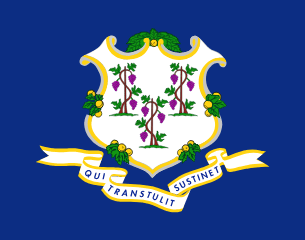
Connecticut
Exactly two operators, both tribal. DraftKings and FanDuel only.
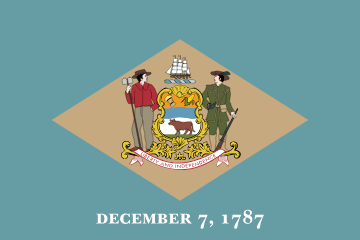
Delaware
One technology stack for the whole state. BetRivers is the only major brand.
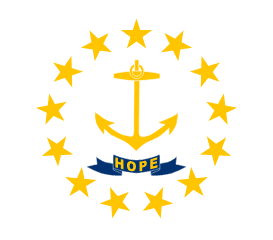
Rhode Island
A lottery monopoly run by Bally’s. None of the 10 major brands.
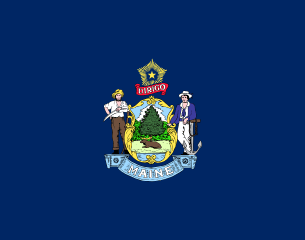
Maine
Authorized Jan. 11, 2026. No rule final, no operator licensed, no hand dealt.
New Jersey
The deepest and oldest market, and the template the rest of the country copies. The Division of Gaming Enforcement, housed in the Office of the Attorney General, investigates and enforces while the Casino Control Commission handles licensing. Internet gaming opened in November 2013. Nine Atlantic City casino hotels hold permits, each able to carry several consumer brands, and the permit runs a single year at no less than $400,000 to issue, the shortest term anywhere. All 10 major brands operate here. July 2026 internet gaming win was $276.9 million, up 12.0 percent, taxed at 19.75 percent since July 1, 2025.
Pennsylvania
Number one by revenue. Interactive gaming certificates from the Pennsylvania Gaming Control Board run five years, with renewal papers due six months before expiry under 58 Pa. Code Chapter 803a. Eleven casinos booked iGaming revenue in July 2026, a month that produced $249,007,485 statewide, up 9.09 percent, alongside $115,548,069 in tax. The tax split matters at a blackjack table. Online table games are taxed at 16 percent where slots are taxed at 54 percent, and that gap is why Pennsylvania operators keep building live studios. Nine of the 10 major brands are live, all but Hard Rock Bet.
Michigan
The most structurally interesting of the seven. The Michigan Gaming Control Board seats five members on four-year terms, no more than three from one party under MCL 432.204, and its internet gaming licenses number exactly 15: three held by Detroit casinos, 12 by federally recognized tribes. Every slot is filled, so a brand enters only when an incumbent leaves, which is how bet365 arrived April 17, 2026 in the place PokerStars vacated. Tax is tiered from 20 to 28 percent of adjusted gross receipts, July 2026 receipts were $302.77 million, and all 10 major brands compete here.
West Virginia
Small, and capped by statute. HB 2934 reached the books unsigned by Gov. Justice on March 9, 2019 and took effect that June. W. Va. Code 29-22E-6 limits the state to five interactive licensees at $250,000 to enter and $100,000 to renew on five-year terms, while rule 179 CSR 10-20.1 allows each licensee three branded skins, so five licenses can support 15 brands. That reconciles press counts of 10 or 11 West Virginia Lottery casinos with a statutory ceiling of five. Tax is 15 percent, paid weekly. Eight of the 10 major brands are live, missing bet365 and Hard Rock Bet, and live blackjack streams in from Evolution’s Pennsylvania studio.
Connecticut
Connecticut has exactly two online casino operators and will keep having two unless the compacts change. Rather than open commercial licensing, the state amended the Mashantucket Pequot and Mohegan compacts, which left the master wagering licenses with those two tribes and the resulting product under the Department of Consumer Protection. DraftKings runs under the Mashantucket Pequot Tribal Nation and FanDuel under the Mohegan Tribe, the latter also branded as Mohegan Sun Casino. Every other major brand is shut out permanently, and BetMGM is not here, an error repeated constantly elsewhere. Live blackjack comes from an Evolution studio in Fairfield.
Delaware
Delaware went first, in November 2013, and is still the smallest genuine market in the country. Authority rests with the Delaware Lottery, three video lottery agents supply the product, and one technology stack carries all of it under an exclusive Rush Street Interactive deal announced Jan. 3, 2024. Because Delaware Park and Harrington Raceway push their casino games out through the BetRivers app, BetRivers is the state’s only major brand, while Bally’s Dover fields a separate app on identical technology. Evolution live tables, blackjack included, went live July 2, 2024.
Rhode Island
A monopoly, and worth describing as one. The Rhode Island Lottery holds the interactive gaming license itself, Bally’s runs the consumer product under contract, and the Department of Business Regulation oversees both. Play began March 5, 2024, four days after a technical trial, and the online poker the statute authorizes has never opened. None of the 10 major brands is available. Bally Casino is the whole market, and the fiscal 2025 lottery audit shows the scale: 272 online slots against six live tables covering blackjack, roulette and speed baccarat. Rhode Island is also the only state where the ages differ, 18 in person and 21 online.
Maine: Authorized, Not Live
Maine is the lone state to finish a bill in the 2025 and 2026 sessions, and it still has nothing to play. Gov. Mills declined to sign LD 1164, which became chapter 538 on Jan. 11, 2026 without her, and it now sits at Title 8, chapter 39, sections 1401 to 1417. Its definition of internet gaming names blackjack explicitly. The right is exclusive to the four Wabanaki nations, which may contract with platform operators, and operators forward 18 percent of adjusted gross receipts to the state. Proposed Chapter 70-84 went out from the Gambling Control Unit on July 15, 2026 with comments closing July 27, and the applications page says submissions are not yet accepted. Nobody is playing legal Maine blackjack. Our Maine page tracks it.
The regulator behind each market
Who writes the rules, who holds the license file and where the public roster of approved domains lives.
Legal Blackjack Sites: The 10 Licensed Operators
Ten brands supply nearly every licensed online blackjack table in the country, and no two of them cover the same set of states.
Ten brands supply nearly every licensed online blackjack table in the country. Start with the footprint table below rather than any review, because which states a brand actually serves is the detail written up wrongly more often than any other.
| Brand | NJ | PA | MI | WV | CT | DE | RI | States |
|---|---|---|---|---|---|---|---|---|
| DraftKings Casino | Yes | Yes | Yes | Yes | Yes | No | No | 5 |
| FanDuel Casino | Yes | Yes | Yes | Yes | Yes | No | No | 5 |
| BetRivers Casino | Yes | Yes | Yes | Yes | No | Yes | No | 5 |
| BetMGM Casino | Yes | Yes | Yes | Yes | No | No | No | 4 |
| Caesars Palace Online Casino | Yes | Yes | Yes | Yes | No | No | No | 4 |
| Fanatics Casino | Yes | Yes | Yes | Yes | No | No | No | 4 |
| Golden Nugget Online Casino | Yes | Yes | Yes | Yes | No | No | No | 4 |
| Horseshoe Online Casino | Yes | Yes | Yes | Yes | No | No | No | 4 |
| bet365 Casino | Yes | Yes | Yes | No | No | No | No | 3 |
| Hard Rock Bet Casino | Yes | No | Yes | No | No | No | No | 2 |
Three things fall out of it. No brand reaches more than five of the seven states, and the two groups of five do not contain the same states, since DraftKings and FanDuel took Connecticut, BetRivers took Delaware, and no brand has both. Delaware has one of the 10 and Rhode Island has none. The common ground is the core four of New Jersey, Pennsylvania, Michigan and West Virginia, where eight of the 10 operate. Game mix, table limits and side bets then differ state by state, because each regulator approves its own.

DraftKings Casino
Live in five states, its Connecticut license flowing from the Mashantucket Pequot Tribal Nation. Evolution supplies the live tables from studios inside the market, Fairfield covering Connecticut players and Pennsylvania covering West Virginia. The RNG shelf covers Classic, European, Infinite and Double Exposure alongside sports-themed builds including Football Blackjack, which no rival carries. Circulating title counts for the brand trace to a single affiliate source and are not repeated here. DraftKings also owns Golden Nugget outright, so in four states a player can open two DraftKings-controlled lobbies whose live tables are largely identical and whose RNG exclusives differ. That is choice at the surface and less of it underneath.
FanDuel Casino
Live in the same five as DraftKings. The paperwork surprises people: FanDuel’s New Jersey permit sits under Golden Nugget Hotel Casino and Marina, and Connecticut runs under the Mohegan Tribe. Live blackjack is Evolution with a dedicated lobby and Infinite Blackjack, while the RNG side pairs Blackjack Classic with branded Football and NHL variants. The advertised library of more than 1,800 games is a whole-lobby figure and says nothing about blackjack depth. The genuine advantage for a table player is promotional structure, since FanDuel has run first-day lossback at 1x playthrough, one of very few offers blackjack can realistically clear.
BetMGM Casino
Four states: New Jersey, Pennsylvania, Michigan and West Virginia. Connecticut is not among them, whatever the sportsbook map suggests, and the sportsbook is exactly where the confusion begins. BetMGM holds the largest share of licensed US online casino revenue among these brands, roughly 20 to 21 percent in its active markets. Live blackjack comes from Evolution and Ezugi. One correction matters. Those Playtech rooms built inside MGM Grand Las Vegas and the Bellagio feed Ontario and Alberta. American players are not served by them. Pennsylvania penalized the operator $260,905 on Jan. 29, 2025 after 152 self-excluded people were allowed to gamble, then $100,000 in March 2026 over verification failures.
BetRivers Casino
Live in five, but a different five: New Jersey, Pennsylvania, Michigan, West Virginia and Delaware, where it is the only major brand. Connecticut is closed to it. The Pennsylvania license comes through Rush Street’s own Rivers Casino Philadelphia, the Michigan one through the Little River Band of Ottawa Indians. For a table-first player this is arguably the strongest of the 10: the New Jersey lobby lists nine separate blackjack variations, Fun Fun 21 and Infinite Blackjack among them, and that is the one per-state blackjack count in this group that stood up to checking. There is a branded exclusive live table too, and the welcome offer has run as a lossback at 1x rollover.
Caesars Palace Online Casino
Live in four, with New Jersey operating under the Tropicana Atlantic City permit and older material still using the former Caesars Casino name. This is the best-documented blackjack story of the group. Caesars had Evolution build it branded live studios, Pennsylvania in January 2025, New Jersey at Tropicana in April 2025 and Michigan on July 14, 2025. The Pennsylvania and Michigan rooms each hold five blackjack tables, one VIP-exclusive, plus a roulette and a baccarat table. No other brand here deals from its own branded tables. Michigan collected a $100,000 fine, paid September 2025, over a payment failure that allowed fraudulent deposits.

Fanatics Casino
Live in four, under Bally’s Atlantic City in New Jersey, with Pennsylvania added Jan. 22, 2024 and a standalone casino app in May 2025. The honest verdict for a blackjack audience is that this is the thin one: reviewers independently flag the table selection as needing work, and the library is slot-heavy. Live dealer is Evolution with an exclusive Fanatics table and Infinite Blackjack. FanCash offsets the depth problem, worth up to 10 percent back, redeemable against merchandise, and promoted at double rates on live blackjack bets. Nearly every other rewards scheme discounts table play.

Golden Nugget Online Casino
Live in four. A $1.6 billion all-stock purchase by DraftKings closed Aug. 9, 2021, and the brand still runs as its own lobby under its own Atlantic City property. For years this was New Jersey’s deepest table lineup, and breadth is still the pitch: classic and multihand blackjack, low-limit tables, side-bet variants. House-exclusive titles do exist, though the ones confirmed are roulette rather than blackjack. Shared ownership shows in the live content, which is nearly identical to the DraftKings lobby, so two accounts here are not two independent operators.
Horseshoe Online Casino
Live in four, plus Ontario. Caesars Entertainment’s second online casino borrows the parent’s platform, its studios and its loyalty program. Michigan came first in October 2024 through the Sault Ste. Marie Tribe of Chippewa Indians, and New Jersey finished the rollout. The case for choosing it over Caesars Palace is narrow but real: it shares the branded Evolution rooms, and the July 2025 Michigan announcement names Horseshoe, so a Michigan player reaches the same five branded tables including the VIP-exclusive one.

bet365 Casino
Three states: New Jersey, Pennsylvania and Michigan. West Virginia is not one. No brand here shows a wider gap between its sportsbook and its casino, roughly 16 states against three. The New Jersey permit belongs to Hard Rock Hotel and Casino Atlantic City, seating bet365 and a direct rival on one license, while Michigan arrived April 17, 2026 by way of the Little Traverse Bay Bands of Odawa Indians. It is the only brand here running two live suppliers seriously: Evolution launched in New Jersey in February 2025, then on Jan. 12, 2026 Playtech opened bet365-exclusive studios in New Jersey and Pennsylvania carrying 10 tables between them.

Hard Rock Bet Casino
Live in two, New Jersey and Michigan, the narrowest footprint of the 10, while its sportsbook runs in about 10 states. New Jersey launched in August 2023 under the company’s own Atlantic City property, and Michigan followed Dec. 2, 2025 through the Hannahville Indian Community, taking the licensing slot 888 gave up. For two states the live operation is large, pairing Evolution with Playtech and naming Infinite and Lightning Blackjack. The variant count circulating for this brand confuses a supplier’s whole live catalog with its blackjack titles, so no figure appears here. Coverage is where it falls short.
Before you open an account anywhere
Confirm the domain is on your state’s roster, then read the terms that decide whether a win actually reaches your bank.
Online Blackjack in the 42 Non-Regulated States
More than 85 percent of American adults live where no regulator has approved a single online blackjack table.
No online blackjack is licensed in 42 states or the District of Columbia. That includes every large state except New Jersey, Pennsylvania and Michigan, and it includes Nevada, whose interactive license covers poker. More than 85 percent of American adults live somewhere on that list, which is why the honest version of this page describes what those readers can actually reach rather than pretending the question does not arise.
Travel is the only fully legal route. Licensed states check physical presence, never residency, so a Texan standing in Atlantic City can register, verify, deposit and play, and will watch the app refuse to deal the moment geolocation places the phone outside the line. The account survives the state border; only play stops. Land-based options at home are narrower than people assume. The Oklahoma model compact reaches only card games the house does not bank, which leaves tribal blackjack there pooled among players with a fee charged per hand, and Washington’s licensed card rooms hold any single blackjack wager to $400 under WAC 230-15-140.
Offshore sites are what most people in these states actually use. That market predates UIGEA, signed Oct. 13, 2006, and predates New Jersey’s licensed launch by more than a decade, and friction sustains it: an offshore account opens in minutes with nothing uploaded, while a licensed one takes no deposit before identity is settled and deals no hand before your location is proven. A letter from all 50 state attorneys general to the US attorney general on Aug. 5, 2025 asked for injunctive relief and sized the illegal market at $400 billion, with roughly $4 billion a year in state tax going uncollected.
Two corrections belong here
Offshore access is not universal, because Bovada alone blocks 19 states plus the District of Columbia while its sister brands block almost nobody, a commercial judgment rather than a legal one. And Washington is genuinely different: RCW 9.46.240 makes internet gambling a class C felony carrying up to five years and $10,000, upheld against a Commerce Clause challenge in Rousso v. State in 2010. No prosecution of an ordinary player has ever been reported, and the text still reads the way it reads. See our Washington page.
What the law actually says where you live
The federal statutes, the state codes and the practical exposure, written out rather than summarized into a slogan.
Are Offshore Blackjack Sites Legal?
Two different questions get mixed together here, and they have two different answers.
No, offshore sites are not licensed in the United States
Casinos serving Americans from abroad hold no US license, answer to no US regulator and appear on no state’s roster of authorized sites. If a state publishes that roster and a site’s exact domain is missing from it, the site is unlicensed there whatever its footer claims. No Caribbean, Indian Ocean or Central American license changes that answer.
The question most readers are actually asking is different: does the player commit a crime. The federal statutes are drafted around the operator, and the operative words show it.
The Wire Act
Reaches “whoever being engaged in the business of betting or wagering,” which an individual betting for their own account is not.
UIGEA
Its prohibition runs against a person in that business who knowingly accepts payment, with the compliance burden landing on banks and card networks.
The IGBA
Needs a business violating state law and five or more people running it, and Sanabria v. United States excludes “participation as a mere bettor.”
State codes are where individual exposure would live, and it is usually thin. The usual drafting punishes running a gambling house, promoting the activity or taking a profit from it, and leaves the bettor either unmentioned or exposed to a petty misdemeanor no prosecutor pursues. Connecticut’s action against Bovada cited operator-facing statutes plus the state unfair trade practices act. Washington stays the exception. In practice it is small and on paper it is large, and those are two different things.
Enforcement confirms the pattern. Michigan’s board issued 45 cease-and-desist orders across the four months before its April 7, 2026 announcement. Illinois wrote to Harp Media B.V. on Feb. 3, 2025. As of Dec. 10, 2025 Tennessee’s Sports Wagering Council counted $800,000 in fines levied against 24 illegal entities, seven of which had left the state. Florida’s attorney general sued Stake and VGW on Aug. 19, 2026 and named four payment processors as co-defendants. Not one of those actions charged a customer. What reaches players instead is commercial: arbitration clauses with class-action waivers, published payout ceilings, and no tax paperwork at year end. Our offshore versus licensed comparison goes further.
Enforcement, blacklists and who gets charged
The regulator files, the cease-and-desist orders and what has actually happened to operators and to players.
Offshore Blackjack Sites That Accept USA Players
Listed separately from the licensed operators above, judged on separate evidence, and never ranked against them.
These five are here because American blackjack players use them. None of them is licensed in the United States and none is presented as equivalent to a state-licensed site. Every fact below comes from the operator’s own pages or a regulator’s filing, and where nothing of that kind could be found, the hole is described rather than filled.

Bovada
The largest US-facing brand and the most restricted, blocking 19 states plus the District of Columbia: Arizona, Colorado, Connecticut, Delaware, D.C., Kansas, Louisiana, Maryland, Massachusetts, Michigan, Nevada, New Hampshire, New Jersey, New York, Ohio, Pennsylvania, Rhode Island, Tennessee, Vermont and West Virginia. Connecticut and the District were switched off in July 2024, following a cease-and-desist letter dated June 14, 2024. The brand’s own blackjack page lists 20 RNG titles, running from Single Deck and Double Deck through Zappit, Pirate 21 and Pontoon. Two problems. The terms claim licensing by the Union of the Comoros and by an authority with no public register anywhere. And the fiat exit is narrow: a wire caps at $9,500 per 30 days against VIP tables the operator states run to $50,000.

Cafe Casino
The most verifiable of the five, and not by a little. Its own FAQ names the operating company, Arbol Media B.V., and publishes a current Curacao Gaming Authority number, OGL/2024/670/0711, issued under the licensing regime that took effect Dec. 24, 2024. That is more than either sister brand offers, though the same page notes a different entity operates the site in some jurisdictions, so the license covering a player can change with the location. Only Maryland and New Jersey are restricted. Nine blackjack variants are named on the table page, which unusually puts Classic Blackjack at 3:2 in writing. Banking detail, payout speeds, withdrawal limits, fees and bonus weighting are published nowhere reachable.

Ignition Casino
A sister brand to Bovada and Cafe Casino, and the contrast is the story: Ignition turns away five states, Delaware, Maryland, Nevada, New Jersey and New York, where the sister brand turns away 19 and the District. One family, one market, two very different maps, which is what a license looks like when it constrains nobody and the real input is a guess about enforcement risk. Ignition does publish an Anjouan entity, Arachis Media, with the operating company registered as Bamboo Media under licence No. 11548. A number beats silence, but the Comoros government warned about that structure in January 2026 and no reachable register exists to check it against. Every circulating variant count and bonus weighting traces to affiliate pages, so none appears here.
Love2Play
Operating since 2017 and part of the WebPartners group alongside MyBookie, XBet and BUSR. Its strength is genuine depth: its own pages count 32 RNG blackjack titles alongside 18 live blackjack tables, which is more blackjack than any licensed American operator publishes. Disclosure runs the opposite way. It claims only to be licensed by the government and laws of Curacao, with no license number and no operating company on any legal page, which is a meaningful omission under a regime where current licensees carry a formatted number. There is no restricted-state list anywhere on the site, yet the terms keep a right to void deposits and winnings after the fact. Rollover is 40x the bonus plus 1x the deposit, with no weighting chart.

BetOnline
This entry is short because the evidence is. Automated requests are refused on every path across the operator’s domains and no archive holds a copy of the terms, so nothing the company publishes about itself could be read. Claims about the states it accepts, its banking limits, its payout speeds, its variant counts and its live supplier all appear only on affiliate pages and are not repeated here. One regulator’s file supplies everything that follows. On April 28, 2025 the Michigan Gaming Control Board ordered the Panama-based operators of BetOnline.ag and SportsBetting.ag to stop, confirming that the sites offer blackjack and fund accounts by card, wire and cryptocurrency, and noting an earlier letter from July 2024 that drew no timely response.

Legal vs Offshore Blackjack Sites
The two categories are separated and labeled everywhere on this site, so you never have to guess which kind of site a page is describing.
Licensed US sites
- A named state regulator holding subpoena power and renewal leverage
- Every game approved against a filed prototype and paytable
- Player funds segregated by rule, attested by a named executive
- A written complaint answered on a deadline, then a state dispute process
- Bonus weighting stated in the terms before you deposit
- No published cap on a cashable balance
Offshore sites
- Curacao, Anjouan, Kahnawake, or a body keeping no public register
- No one the player can inspect approves the game
- Segregation required on paper, with no attestation or inspection
- No US escalation path, and the Curacao authority disclaims player complaints
- Blackjack bonus weighting published by no brand in this set
- Per-method payout caps, as low as $9,500 per 30 days by wire
| Question | Licensed US site | Offshore site |
|---|---|---|
| Who licenses it | A named state regulator on a one to five-year term, fees of $50,000 to $400,000 | Curacao, Anjouan, Kahnawake, or a body keeping no public register |
| Who approves the game | The regulator, measuring it against an approved prototype and filed paytable | No one the player can inspect |
| Who holds your balance | A segregated account, formula fixed by rule, attested by a named executive on a schedule | Segregated by Curacao rule, with no attestation, schedule or inspection |
| If it refuses to pay | A regulator holding subpoena power, fines and renewal leverage | The support desk, then whatever service the terms name, if any |
| Escalation path | Written complaint, answered on a deadline, then the state dispute process | No US path. The Curacao authority disclaims player complaints |
| Age and identity | 21 or older, identity established before funding | Usually 18, often nothing verified until a withdrawal |
| Geolocation | Checked at login and monitored during the session | None, and a blocked state can void winnings after the fact |
| Blackjack bonus weighting | Stated in the terms before you deposit | Published by no brand in this set |
| Payout ceiling | No published cap on a cashable balance | Per-method caps, as low as $9,500 per 30 days by wire |
| Game variety | Narrower, and different in each state | Usually wider, disclosed in less detail |
The reserve line is not a slogan. Under 58 Pa. Code 811a.5 Pennsylvania holds the player-funds account at or above the day’s closing cashable balance, plus money on games and withdrawals in progress, and takes a quarterly attestation over the chief financial officer’s signature. West Virginia demands a West Virginia bank account and a monthly attestation from the casino controller. Connecticut takes a monthly attestation, New Jersey requires an insured in-state institution with monthly schedules filed, and Michigan accepts cash, a letter of credit or a bond while forbidding automatic transfers out of a player’s account. Records that let a regulator reconstruct a hand you played four years ago must survive no less than 10 years in New Jersey.
The lazy version of this comparison says offshore licensing requires nothing, and that stopped being true on Dec. 24, 2024, when Curacao’s new gaming law took effect. Operators moved to direct licensing, and the standing conditions require segregated player accounts, certification of every game by an approved laboratory, deposit limits, self-exclusion, a complaints procedure and periodic reporting. So duties exist on paper. Nothing a player can verify does: no attestation is published, no filing calendar exists, no signatory is named, no certificate register can be searched, and no case is on record of that authority forcing an operator to pay anyone. The distinction is not a rule against no rule. It is a written rule against a rule somebody actually verifies.
A comparison conceding nothing is worthless, so concede this. Offshore wins on variety, where one brand’s own pages beat every licensed American lobby, and on speed, because crypto outruns a bank transfer. It wins on access and friction too, since no location check means no session dropping at a state line and no documents at signup. Each of those advantages exists because the rule that would create the matching protection is missing.
Telling them apart takes under a minute
Read the footer for a named American regulator and a 21-plus statement. Treat any site accepting all 50 states as offshore by definition, because no US license permits that. Try registering from outside the state: a licensed operator opens the account and then refuses to deal. Then check the exact domain against the regulator’s published list, which our guide to verifying a license maps state by state.
Licensing, testing labs and the paper trail
Who issues the license, who certifies the game and how a player checks either one without taking anybody’s word for it.
States With Active Online Gambling Bills
Two full sessions produced exactly one finisher, and procedure explains more of that than opposition does.
Legalization has stalled. Two full sessions produced exactly one finisher, Maine, which got there by handing exclusivity to its tribes instead of opening commercial licensing. That is one authorization in two years, from legislatures that passed 10 sweepstakes bans in the same period.
Eight jurisdictions came closest and none crossed.
| Jurisdiction | Bills filed | Why it stalled |
|---|---|---|
| Virginia | SB 118, HB 161, SB 827 | The most persistent multi-bill effort in the country, and none of the three crossed. |
| Maryland | SB 761, SB 885, SB 340 | The worst procedural path anywhere: the constitution sends any authorization to a voter referendum, which adds a campaign and organized opposition on top of the time. |
| New York | S 2614 | Filed repeatedly in the largest state without a licensed market. |
| Illinois | SB 1963, HB 3080 | The biggest remaining prize on population and existing casino infrastructure. Neither bill moved. |
| Ohio | SB 197, HB 298 | Rival vehicles, with the governor opposed. |
| Indiana | HB 1432 | Died while the state’s sweepstakes ban passed. |
| Wyoming | None in 2026 | No iGaming bill was filed at all, and the gaming committee declined to advance a draft on July 30. |
| District of Columbia | B26-0656 | Introduced April 9, 2026. Would legalize online gaming and ban sweepstakes in one measure. |
Procedure explains more of this than opposition does
Regular sessions in Texas, Montana, Nevada and North Dakota convene only in odd-numbered years, so silence from them in 2026 carries no signal. South Dakota confines commercial casino gambling to Deadwood by constitution, so no ordinary bill can authorize statewide play. And in an even-year budget session Wyoming requires a two-thirds vote just to introduce a non-budget bill, which kills measures that would pass on a simple majority.
The unglamorous forecast is that the next new market is Maine switching on rather than a ninth state authorizing. Legislation is reviewed here every month on the bill tracker.
Follow the states that are still moving
Bill numbers, committee votes and effective dates, checked monthly rather than copied from a press release.
Free Blackjack Sites
Free blackjack arrives in three forms that sit in different legal categories and are worth very different amounts.
Demo mode at a licensed casino
The useful one. Several operators open a game in practice mode without funding, and in the ordinary case it runs the same certified engine, so rules, paytable and dealer behavior match.
Standalone practice trainers
Unconnected to any operator. They drill basic strategy competently and certify nothing.
Social casino chips
The belief that a chip worth nothing cannot amount to gambling has been tested in court and lost.
The caveat nobody prints
The free build is not guaranteed to be the paid one, because no state makes a practice instance match the funded game field for field. The money game’s own help screen, which New Jersey requires to carry deck count, special odds and supplemental wagers, is the authoritative version.
The Ninth Circuit decided Kater v. Churchill Downs on March 28, 2018, ruling that Big Fish Casino’s virtual chips counted as a thing of value under Washington law because holding them bought the privilege of playing on. That case settled at $155 million. Washington later produced a $415 million DoubleDown outcome and a jury verdict of about $24.9 million in Larsen v. PTT, LLC on Feb. 7, 2025. What none of the three can teach you is the math: with a standard deviation near 1.15 units a hand, a few hundred hands of free play cannot distinguish a good game from a bad one. See our breakdown of social, sweepstakes and real money play.
Blackjack Bonuses
Blackjack players get the worst of casino bonusing, and the cause is arithmetic rather than malice.
A well-played hand returns about 99.5 percent of the wager while a slot returns 94 to 96 percent, so clearing a bonus at blackjack on slot terms would cost the house several times what a slot costs it. Weighting is the industry’s fix. A slot dollar usually counts in full toward a wagering requirement while a blackjack dollar counts a dime or less, and often nothing.
Do the arithmetic once and you will not need to again.
A $100 bonus at 30x requires $3,000 of wagering
That is the requirement on the bonus alone, before any weighting is applied.
Counted in full, it costs you about $15
A basic-strategy player pays roughly $15 for the $3,000 of action and takes $100 out.
Counted at 10 percent, it costs about $150
A wagered dollar buys a dime of credit, the requirement swells to $30,000 of action, and $30,000 at a 0.5 percent edge costs roughly $150. You are paying $150 to unlock $100.
At zero weighting, it never clears
Common on live dealer. No amount of blackjack ever satisfies the requirement.
The clause that voids the most winnings
The maximum bet permitted while bonus funds are live, usually $5, $10 or $20. Cross it once and the usual remedy is losing the bonus and every dollar won with it. It catches table players structurally, because a $10 cap is unusable at a $25-minimum live table and because doubling a $10 bet puts $20 at risk on a hand already committed, and most terms never say which reading applies. Look at the balance breakdown for a bonus component before the first bet of a session, because an automatic deposit match keeps that restriction alive without telling you.
Offers that work for a blackjack player
- Lossback at 1x rollover, which FanDuel and BetRivers have both run
- Rewards currency instead of bonus funds, such as the double FanCash Fanatics has promoted on live blackjack, since a rebate carries no rollover and no bet cap
- Declining the bonus outright, which leaves the balance fully withdrawable
Offers that do not
- Any deposit match cleared at 10 percent weighting or less
- Live dealer bonuses at zero weighting, which no amount of play clears
- Offshore offers, which look larger and are structurally worse
- Any offer where blackjack’s contribution rate is not published before you deposit, which is every brand in the offshore set
More in our blackjack bonus guide.
Read the terms before the offer
Where the money actually gets lost is in clauses most players never open until a withdrawal is already refused.
Deposits and Payouts
A withdrawal is four clocks, not one, and naming the stage is what gets a complaint taken seriously.
The request leaves your playable balance
Immediately, at a well-run site.
Internal review
Checks identity, source of funds and bonus status. First withdrawals almost always sit here, because this is when verification actually happens.
Approval and release
May be batched once or twice a day.
The payment rail
Runs on its own schedule: ACH in one to three business days, a card refund possibly a full billing cycle, a check by mail.
“Approved four days ago and nothing has landed” describes the rail. “Requested six days ago and still under review” describes the operator, and that is the version a regulator will act on.
Michigan is the only state that put a deadline in the rule
Mich. Admin. Code R. 432.655d requires a withdrawal to be honored within 10 business days unless the operator reasonably believes the player engaged in fraudulent conduct, and even then it must describe the investigation and provide written status updates every 10th business day. The rule also settles the last leg in the player’s favor by requiring the request be honored notwithstanding a delay by a processor, card issuer or bank. Elsewhere the rules govern where your money sits rather than how fast it moves.
Declines at offshore cashiers are federal design rather than a glitch. UIGEA’s Regulation GG designates five payment systems that must police these transactions and expects card systems to use merchant category coding to identify and refuse them, and code 7995 is betting and casino gambling. That is the entire reason offshore sites push crypto. Separately, casinos are financial institutions under the Bank Secrecy Act, so a suspicious activity report can be filed at $5,000 and federal law forbids the operator from telling you, which is why a support agent genuinely cannot explain some holds, and why splitting deposits to stay under a threshold is the worst available move. Offshore ceilings are published and low, a wire capped at $9,500 per 30 days being the clearest example. See our page on withdrawal delays.
When the money does not arrive
What a regulator will act on, how to word the complaint and where escalation actually ends.
Mobile Blackjack Apps
Both app stores gate real money gambling apps by jurisdiction under published policy, which produces one very useful test.
Apple’s guideline 5.3.4 requires such apps to hold licensing in the locations where they are used, to be geo-restricted to those locations and to be free, and it separately bars card counters as gambling aids. Guideline 5.3.3 blocks in-app purchase for real money gaming credit, which is why you fund a casino account at the cashier and never through your Apple ID.
The practical consequence is blunt
Because an app cannot be geo-restricted to a licensed market that does not exist, any app promising real money casino blackjack in a state without one is not operating under the rules the stores enforce.
In a legal state the app usually beats the mobile browser, because the operator’s location software runs natively on the handset, where a browser must borrow an operating system permission and, on desktop, a separate plugin. So the false out-of-state rejections cluster in browsers, along state lines, and on handsets whose battery saver is throttling location. Precise location is mandatory and camera access is legitimate at the identity step. Treat requests for contacts, SMS, call logs or Android’s accessibility service as red flags, because none has any role in taking a blackjack bet. Offshore apps reach neither store, so what they offer is a web wrapper or a package you install by disabling the protection that would have stopped it. More in our mobile blackjack guide.
Apps, permissions and the fakes
What a legitimate casino app asks for, what it never asks for, and how the counterfeits get onto a handset.
Live Dealer Blackjack
A licensed studio, a real table, a human dealer, cameras carrying it to you, and a betting interface laid over the picture.
The video does not decide anything
Cards pass an optical reader leaving the shoe, recognition software turns each into data, and a control server settles every wager from that data, so a buffering stream does not mean your hand went unresolved. New Jersey covers this at N.J.A.C. 13:69O-1.6, which demands a simulcast control server logging every wager and result, blocking access to an outcome until the wager is finalized, and recording dealer-verified results ahead of posting. West Virginia’s rule carries the same requirements and adds surveillance the regulator can access directly.
Supply is concentrated. Nearly every live blackjack hand legally dealt to an American comes from Evolution, and where the studio may sit is a matter of state rule rather than industry habit. New Jersey requires the operator’s primary equipment to sit within Atlantic City, while West Virginia has no in-state studio at all and is served from Pennsylvania. Dealers are licensed individually and it is enforced, which Pennsylvania demonstrated on March 22, 2023 with a $7,500 fine against Evolution US because an unlicensed employee dealt blackjack in its studio. Counting does not work at these tables: penetration is shallow, many use continuous shufflers, the pace is 30 to 45 hands an hour, and your bet spread is a logged data point. More in our live dealer guide.
How the live game is actually policed
Studio licensing, dealer licensing, the control server and what fairness means when a human is turning the cards.
Online Blackjack at Sweepstakes Casinos
An accurate explanation of a model millions play without a clear picture of what they hold.
Our position on sweepstakes blackjack
We do not put sweepstakes forward as a good option for a blackjack player, and it is not real money blackjack. It still deserves an accurate explanation, because millions play without a clear picture of what they hold.
Two currencies run side by side on the same games. Gold Coins have no cash value and convert to nothing. Sweeps Coins are used in promotional play and can be redeemed for prizes, and they arrive free with a Gold Coin purchase or by mailing a request. Most state gambling definitions need prize, chance and consideration together, and the model concedes the first two while resting everything on the third: no purchase is required, so this is a promotional sweepstakes rather than a casino. That explains why not one of these companies has ever applied for a US gaming license. The age is 18, where every licensed operator sets 21.
Legislatures have declined to argue about consideration and have drafted around it. Montana’s SB 555 is the template, banning online casino games “by whatever name known” using “any form of currency” while expressly permitting sites that allow no currency of any kind, without ever using the word sweepstakes. Nine such bans are in force and a 10th arrives Nov. 1, 2026.
| State | Vehicle | Effective |
|---|---|---|
| New Jersey | A5447 | Aug. 15, 2025 |
| Montana | SB 555 | Oct. 1, 2025 |
| Connecticut | SB 1235 / PA 25-112 | Oct. 1, 2025 |
| New York | S5935A, Ch. 605 | Dec. 5, 2025 |
| California | AB 831 | Jan. 1, 2026 |
| Indiana | HB 1052 / PL 153 | July 1, 2026 |
| Tennessee | SB 2136 / HB 1885 | Signed May 2026 |
| Maine | LD 2007 / PL ch. 645 | July 2026 |
| Louisiana | HB 883 / Act 182 | Aug. 1, 2026 |
| Oklahoma | SB 1589, veto overridden | Nov. 1, 2026 |
Any tracker showing 11 has counted Nevada
Nevada’s SB 256 avoids the word entirely and works as an enforcement measure, adding disgorgement and lifting the out-of-state wager offense to a gross misdemeanor. Brands do pull out of Nevada. That is not the same as a ban.
For a blackjack player the category is thin and got thinner, because it is structurally slots-first and the suppliers who build live blackjack have walked away. September 2025 brought Pragmatic Play’s formal exit from the US sweepstakes market, and Evolution withdrew 14 live titles from Stake.us, which took that live lobby from roughly 30 options down to 12. Redemption carries its own floor: Chumba’s terms set a $100 minimum, so a player holding $80 of Sweeps Coins can take out nothing, where a $20 blackjack balance at a licensed casino is $20. The same document lists 14 excluded states and waives class claims. Enforcement has meanwhile moved to the payment rails, with Florida naming four processors as co-defendants on Aug. 19, 2026. More at sweepstakes blackjack.
Sweepstakes, social and real money, kept apart
Three different legal categories that get written about as though they were one.
Types of Blackjack Games and Variants
Blackjack is a family, not a game, and its house edges run from roughly half a percent to several percent.
Approximate costs to a basic-strategy player, in percentage points, worst first.
| Rule | What it costs you |
|---|---|
| Payout | 3:2 is standard and 6:5 costs about 1.4 points, more than everything else here combined. |
| Deck count | One deck beats eight by about half a point, and most of that arrives between the first deck and the second. |
| Dealer hits soft 17 | About 0.2 points against a dealer who stands. |
| Doubling after split | Worth about 0.14 points when permitted; restricting doubles to 10 and 11 costs about 0.2. |
| Resplit and draw to split aces | Roughly 0.08 and 0.19 points respectively. |
| Late surrender and dealer peek | Roughly 0.08 and 0.1 points, and surrender is uncommon online. |
A 6:5 game is not a 3:2 game with a smaller natural
Nowhere is that clearer than in New Jersey’s rulebook. The state approves the 6 to 5 variation as a game in its own right, then stacks further penalties into it. Every wager at that variation must be in multiples of $5. Under 13:69F-2.12(d) the dealer draws to a hard 17 or a total of 18 through 21, which is a dealer hitting soft 17 baked into the game. Under 13:69F-2.10(d) the licensee may prohibit doubling after splitting pairs, and 13:69F-2.8(c) makes surrender unavailable at any table offering it. The 1.4 points is a floor.
Among the variants, Infinite Blackjack seats unlimited players behind one dealer hand, Free Bet funds certain doubles and pays for it by pushing every dealer 22, Switch lets you swap second cards and charges twice, and Double Exposure shows both dealer cards while paying naturals at even money. European no-hole-card rules cost roughly 0.1 points, because a dealer blackjack takes your double and split money instead of returning it, and many tables labeled simply “Blackjack” run them silently. Side bets carry edges of 4 to 15 percent, and New Jersey’s deck-count rule exposes the hidden cost: certain optional wagers force a larger shoe, raising the edge on the base game whether or not you take the side bet.
Read the rules panel in one order
Payout, decks, soft 17, doubling, splitting, surrender. If the first line says 6:5, nothing below it rescues the game.
Safety and Security
“Is this site safe” is four separate questions in one coat, and players routinely walk away reassured about the wrong one.
Is the game honest?
Rests on prototype approval and lab certification, and essentially never fails in the licensed market.
Will I be paid?
Rests on reserve rules with a signature attached to them.
Is my data secure?
Data in transit is a solved problem. The stored copy of your driver’s license is where breaches happen.
Is my account secure?
Depends mainly on you, and that is the one failing all the time.
The padlock proves less than people think. Domain-validated certificates cost nothing, issue automatically inside a few minutes, and involve no human checking the applicant, which is why a cloned login page carries one as readily as a casino. Licensed operators run current TLS, and assessors work from the federal benchmark in NIST Special Publication 800-52 Revision 2, but the control that matters is New Jersey’s demand for an independent security assessment every year, not once at the licensing stage.
Identity rules are narrower than most sites claim. New Jersey requires a player to be 21 with identity established before funding, and 13:69O-1.3(b)3 gives the operator a choice between checking two credentials with at least one government issued or using another approved remote authentication method, while the Social Security number is recorded only if voluntarily provided.
Retention is lopsided in a way worth knowing before you need it
Records that reconstruct play survive no less than 10 years, while authentication logs stay accessible only 90 days. A dispute about a hand from four years ago is resolvable. A dispute over who signed in four months ago may be unanswerable.
The instructive account-security case is DraftKings in November 2022, when attackers reached roughly 60,000 accounts and took about $600,000 from around 1,600 of them. Nothing was breached and no encryption was defeated; the passwords had been stolen elsewhere and replayed. The regulatory answer targets visibility instead of cryptography, and 58 Pa. Code 812a.3 requires operators to display your previous login date and time, offer access notifications and re-authenticate after 15 minutes idle. New Jersey adds a suspension after three failed logins and an acknowledgment once lifetime deposits reach $2,500. Offshore, none of this has a counterpart: no annual assessment filed with anyone, no published retention floor, so paperwork capable of settling a dispute three years from now is under no obligation to survive that long.
Everything on safety and security
Nine pages on the parts of a casino account that actually fail, and what a player can do about each one.
Fair Play: RNG, RTP and House Edge
The question has two different answers, and any source giving one answer for both markets is not being straight.
In the licensed market
- The game has to match a prototype the state signed off
- The paytable is on file with the regulator
- The generator must pass named statistical tests
- Rigging one would mean beating a certification and hiding an unapproved build from records kept for 10 years
Offshore
- You are trusting a commercial incentive rather than a control
- The incentive is genuine, since honest blackjack already makes money
- Nothing here alleges that offshore games misdeal
- The point is narrower: if one did, the proof would not exist and there would be no forum to bring it to
Online RNG blackjack works in a way that settles most rigging theories at once: the virtual shoe is rebuilt every hand rather than shuffled once and dealt down, so nothing carries forward, penetration is effectively zero and no count survives a deal. The deck is also never due, because it has no memory between hands. New Jersey’s standard lists the tests a generator has to pass, chi-square, mono-bit and runs among them, then adds the clause that matters most by prohibiting a secondary selection for the purpose of displaying the outcome. Cheating software would work precisely that way, and the rule forbids it in black letter.
One caution about the badges
iTech Labs is not a competitor to GLI, which acquired it May 19, 2023, so the testing market is smaller than the logos suggest.
House edge and RTP are one number stated twice, and hold is something else entirely. Rhode Island’s live table games held about 2.4 percent in fiscal 2025 against slots at 4.6 percent, several times the 0.5 percent basic-strategy edge, because almost nobody plays perfectly, side bets land in the same revenue line, and hold measures money brought to the game rather than money wagered. What survives is the ranking, and the ranking is the point. Variance explains the rest: you win roughly 43 percent of hands and lose 48 percent with 9 percent pushing, and the expected loss does not catch one standard deviation until about 53,000 hands. Nothing in a weekend is evidence of anything. The 1.4 points a 6:5 table takes is not a rumor, and it costs more than any plausible cheat.
Everything on fair play
Eight pages on how the game is certified, what the numbers actually mean and where the money quietly goes.
Blackjack Rules Regulators Actually Enforce at Legal Blackjack Sites
Citations below come mostly from New Jersey and Pennsylvania, whose rulebooks read most clearly. Other states cover the same ground, sometimes in the same words and sometimes not.
Why Game Rules Are a Legal Matter, Not Just a House Matter
Under N.J.A.C. 13:69O-1.5(m)2 a server-based table game must function in accordance with the approved rules for its corresponding authorized live table game. Tethered that way, the online game cannot invent procedure of its own, and departing from the approved version is an enforceable violation rather than a service complaint. It also explains a common misreading. A variant offered in New Jersey and absent in Michigan is rarely an operator holding it back, since approval happens separately in each state.
Mandatory Payout Disclosure Requirements
Payouts are filed terms, not marketing. N.J.A.C. 13:69F-2.5(e) states that a winning blackjack pays “3 to 2, or at odds of 6 to 5 for the 6 to 5 blackjack variation,” and the paytable forms part of the approval and has to be shown. Duties to the player travel with it. The player-protection page must explain how to get the terms and your own play record under 13:69O-1.2(l)14, and 13:69O-1.5(r) makes a game hold the last five results and the amounts staked on them, your only dispute tool before contacting anyone.
3:2 vs. 6:5 and Whether Regulators Restrict It
The truthful answer surprises people. New Jersey does not ban 6:5. It licenses it as a named variation with its own odds written into 13:69F-2.5(e), which tells you what the regulatory approach to game math is: disclosure rather than prohibition. The rule requires a game to do what it says and lets you find out what it says. It promises nothing about whether the game is good. This site knows of no state prohibiting 6:5 outright and asserts none, which produces the most valuable habit here. Check the payout yourself, every session.
Rule Changes Requiring Regulatory Approval
Since the approved prototype is the legal object, altering it means a return trip to the regulator. No operator may quietly move a payout, change dealer behavior on soft 17 or rework a side bet, because the approval cycle covers the change. Enforcement is documented: New Jersey’s docket 20-1212-NV penalized IGT for failing to disable Single Hand Blackjack across all platforms in December 2020. No rigged game and no cheated player, simply a title that was supposed to be off and stayed reachable.
Posted-Rules Requirements at the Table and on Screen
The land-based duty to post a table’s rules and limits where a player can read them before wagering carries online through the prototype tether. That is why every licensed game has a rules panel listing deck count, dealer action on soft 17, doubling and splitting, surrender, side bet paytables and the payout. The panel is the disclosure mechanism, not a courtesy feature. The panel tells you whether that means six decks paying 3:2 with the dealer standing, or a single deck paying 6:5.
Side Bet Approval Processes
Side bets are separately approved wagers with filed paytables, under the same prototype rule as the base game, which is why one branded table carries different side bets in New Jersey and in Michigan. The paytable on screen binds the operator, so declining to pay a listed 21+3 straight flush breaks a rule rather than opening a policy argument. The cost is knowable too, since regulators clear edges of 4 to 15 percent for the reason they clear 6:5: disclosure. One carries tax weight, because a payout of 300 times the wager triggers a W-2G.
RNG Certification Standards for Online Blackjack
N.J.A.C. 13:69E-1.28G lists what a generator must survive, naming chi-square, mono-bit and runs tests and demanding demonstrable unpredictability. The provision protecting you most is not statistical: the rule bars a secondary selection for the purpose of displaying the outcome, meaning the software may not pick a result and then show a different one. Accreditation of the labs is itself regulated. A testing laboratory under 58 Pa. Code 469a.3 needs ISO/IEC 17025 accreditation issued by an ILAC mutual-recognition signatory, and it must stay independent of the operators whose games it examines.
Shuffle and Deck Penetration Requirements
Penetration is usually treated as a counter’s concern, and New Jersey wrote it into rule. N.J.A.C. 13:69F-2.5 puts the cut a minimum of 10 cards in and places the cutting card no less than approximately a quarter of the stack from the back, which fixes the deepest legal penetration at roughly 75 percent. In the other direction 13:69F-2.6(l) allows a reshuffle after any round, so the ceiling sits in rule while the floor is whatever the house wants. Online it is moot, because an RNG game rebuilds the shoe every hand.
Live Dealer Studio Licensing and Location Requirements
There is no national rule here, and the two clearest states disagree. New Jersey requires a casino operator’s primary internet gaming equipment to sit in a restricted area within the territorial limits of Atlantic City under N.J.A.C. 13:69O-1.2(n). West Virginia is the counterexample, with no in-state studio, its live blackjack permitted to stream from Pennsylvania as table game simulcasting. Individual dealer licensing is enforced regardless: Pennsylvania fined Evolution US $7,500 on March 22, 2023 because an unlicensed employee dealt blackjack.
Continuous Shuffling Machines and Disclosure
Shuffling equipment is regulated as equipment, and the sharpest rule concerns what a shuffler may not do. Card-recognition shufflers fall under N.J.A.C. 13:69E-1.28X, which provides that such a device must not supply real-time information aiding the projection of an outcome. Any machine reading the stack knows what is in it, and live access to that knowledge would tilt the game toward the house. On disclosure, the procedure a game uses is the approved one and belongs in the rules panel, but no regulator requires a warning about continuous shuffling.
How to Report a Rules Violation to a Regulator
Every route opens identically, with a written complaint to the operator, since skipping it is the most common reason a complaint bounces. New Jersey wants the casino’s written answer before its Division of Gaming Enforcement dispute form, at igaming@njdge.gov and 609-984-0909. Pennsylvania sets a 30-day filing window under 58 Pa. Code 461a.25. Michigan gives the operator 10 calendar days to respond under R. 432.641, West Virginia the same under 179-10-5.5. A regulator can then pull server-side records and test the game against its prototype. See filing a complaint.
The regulators who write and enforce these rules
Each agency, what it publishes, and the exact route a player uses to reach it.
Player Rights at Licensed Blackjack Sites
One distinction decides nearly every dispute, and missing it is why players quit too early or pick the wrong fight.
The distinction that decides nearly every dispute
Shutting your account down going forward is usually within the operator’s rights. Keeping money you have already won is another matter with another answer. Nothing in any legal state obliges a casino to continue serving you, since a license grants the privilege of offering games rather than a duty to take all comers. Once credited funds are withheld, business discretion ends and a regulated obligation begins, with rule text and deadlines behind it.
What a licensed operator owes you sits in that text. The game must be the approved one. It must recall the last five outcomes and the wagers on them. Records that reconstruct play must survive no less than 10 years. Your own deposited funds carry no wagering requirement, and no operator may dangle an incentive to make you reverse a pending withdrawal, a practice that has drained more from players than confiscations ever did. You are also owed instructions for retrieving your own play record. And in Michigan a withdrawal carries a 10-business-day clock.
Deadlines that run against the operator
- Michigan gives the operator 10 calendar days to respond under R. 432.641
- West Virginia sets the same 10 days under 179-10-5.5
- Silence is the violation itself, which makes documentation your job
Deadlines that run against you
- Pennsylvania’s 30-day filing window under 58 Pa. Code 461a.25 runs against the player
- A month spent arguing with support can cost you the forum entirely
- Authentication logs last only 90 days, so account-access disputes expire fastest
Disputes are decided on records rather than recollection, so request your game history in writing, ask for hand identifiers and timestamps and for the bonus terms as they stood on the day you took the offer, and move fast on any account-access issue.
Regulators do recover money. Connecticut summarily suspended High 5 Games on March 14, 2025 after finding it had taken money from state players outside its authorized offering, identifying roughly 1,100 depositors of whom 911 lost $937,938 and 108 were on the state self-exclusion list. The May 2025 settlement came to roughly $1.5 million, of which more than $643,000 went back to players as restitution. Stated just as plainly: no entitlement runs to an account the operator wants shut, to a bonus whose disclosed terms you broke, to a favorable game, or to play from beyond the licensed state. See confiscated winnings.
Everything on player rights
Seven pages on what a licensed operator owes you, what it does not, and the exact route to a regulator when it says no.
Legal Online Blackjack: Laws, Age, Taxes, VPNs and Geolocation
Two layers explain everything else: federal law binds operators and the movement of money, and whether a licensed market exists at all is a state decision.
The operative words settle it. The Wire Act, 18 U.S.C. 1084, from 1961, punishes a person “engaged in the business of betting or wagering,” and the long argument about it has been whether it stops at sports. The Office of Legal Counsel said it did on Sept. 20, 2011, said the opposite on Nov. 2, 2018, and the First Circuit ruled in New Hampshire Lottery Commission v. Rosen, 986 F.3d 38, on Jan. 20, 2021, that its prohibitions cover only bets on sporting events or contests. Two qualifications get dropped: the 2018 opinion was never formally rescinded, and a First Circuit ruling binds one circuit. UIGEA, 31 U.S.C. 5361 to 5367, created no new gambling offense and pushed compliance onto banks. The Illegal Gambling Business Act, 18 U.S.C. 1955, needs five or more people running a business that violates state law.
Every state with licensed online casino gaming sets the age at 21
It is a licensing condition rather than a house rule, and it is often stricter than the same state’s in-person age. Rhode Island draws it sharpest, where someone of 18 may take a seat on the Bally’s floor and then be turned away by the same company’s app on the sidewalk. No licensed American online blackjack game is open to a 19-year-old, which leaves the 18-year-old with sites that answer to no American regulator.
Two 2026 tax changes can take real money from a player who finishes the year flat
Winnings are taxable whether or not any form is issued, and blackjack seldom produces a W-2G, because table games appear in none of the reporting categories and the only rule that could reach a hand requires a payout of at least 300 times the wager, which the base game cannot produce and some side bets can. The reporting threshold rose to $2,000 for payments after Dec. 31, 2025. The change that matters more caps the wagering loss deduction at 90 percent of losses for tax years beginning after that date, so a player who wins $60,000 and loses $60,000 now deducts $54,000 and reports $6,000 of income nobody ever received. It scales with volume rather than results, which lands hardest on exactly this game. Our tax guide works it through, and none of this is tax advice.
Geolocation is not an operator preference but the condition the market rests on, because UIGEA’s intrastate carve-out is available only where state law includes age and location verification designed to block players outside the state. That is why a licensed site drops a session rather than let it run unverified. Which is also why a VPN fails three ways: it breaches terms that give an operator clean grounds to void winnings, it does not work against a vendor stack cross-referencing GPS, Wi-Fi and cell signals, and it does not move you, since Michigan’s statute deems an internet wager to occur at the operator’s in-state casino and provides that intermediate routing does not determine location. Pretending to be in New Jersey places an unlicensed bet wherever you are actually sitting.
Everything on the law
Sixteen pages covering the federal statutes, the state codes and the questions players actually ask about them.
Licensing: Regulators, Offshore Licenses and Testing Labs
There is no national license. Each genuine American online blackjack license comes from a single state and stops at that state’s border.
Online casinos are licensed by no federal agency, and there is no national license. Nor is a license a certificate bought once: it is an ongoing relationship in which the state vets owners, financing and key staff, clears every game against a prototype, audits compliance and retains the power to shut it down. Michigan puts that power in one clause at MCL 432.309, allowing the board to approve, deny, suspend, revoke, restrict or refuse to renew. A license is that sentence, not the seal at the bottom of a web page.
The seven regulators are built differently. New Jersey splits investigation and enforcement from adjudication across two bodies. Pennsylvania concentrates both in one board. West Virginia and Delaware regulate through their lotteries, and Rhode Island goes furthest by holding the interactive license at the lottery itself while Bally’s operates under contract, so the state is the licensee. Connecticut’s online casino is supervised by a consumer protection department because the market came from amended tribal compacts. Terms and fees vary as much: New Jersey’s permit runs one year at $400,000 or more to issue, while Pennsylvania, Michigan and West Virginia run five years. Pennsylvania’s split fee is worth studying, because blackjack belongs to the table games category, which an operator may simply not buy into. That is the commercial reason one state gets a thin blackjack menu and another a deep one.
Curacao
The common one, changed materially in December 2024. Operators moved to direct licensing with real duties on paper and nothing a player can verify, while the authority disclaims handling individual complaints.
Anjouan
The cheap option, and legally contested. The Comoros government issued a warning about it in January 2026.
Kahnawake
The substantive one. It staffs a full-time dispute resolution officer and publishes a yearly summary of the cases, with one trap: going public with a complaint before filing it can void the claim.
Two facts about testing labs are worth more than any badge
iTech Labs is not independent of GLI, which bought it outright on May 19, 2023, so the market is smaller than the logos imply. And a certificate covers one build of one game on one date, proving neither that the operator deployed that build nor that it still runs today. eCOGRA’s dispute authority comes from British and Maltese regulators rather than any American state. No lab offers a page where a player can enter a certificate number and confirm it, while a state license verifies against a public roster in under a minute.
Everything on licensing
The six licensing guides plus a page for each regulator, covering what it publishes and how to search it.
Tribal Gaming and Its Effect on Online Blackjack
No single factor shapes the online blackjack map more, and it is why several of the largest states have no licensed product and little prospect of one.
The framework opens with California v. Cabazon Band of Mission Indians, decided Feb. 25, 1987, and the congressional answer 20 months later, the Indian Gaming Regulatory Act, 25 U.S.C. 2701, enacted Oct. 17, 1988. Gaming is sorted into three classes, and the class determines who holds authority. Blackjack banked by the house is Class III, which puts it behind a tribal-state compact carrying the interior secretary’s approval. A tribe cannot simply decide to deal it.
Five states show five consequences.
Florida
Deems a wager placed anywhere in the state to occur where the server sits on tribal land. What makes it weak precedent elsewhere is that the deeming language sits in Florida statute 285.710 rather than only in the compact. Interior has since written the server question into regulation at 25 C.F.R. 293.26 and 293.27.
Connecticut
The cleanest proof a state need not fight its tribes, having amended the existing compacts rather than routing around them, which is why it has two online casinos and can never have three.
Maine
The outlier, because Passamaquoddy Tribe v. Maine, 75 F.3d 784 (1st Cir. 1996), held that IGRA does not reach Maine tribes at all, so exclusivity had to be built by ordinary statute, and building it that way is what invited the pending federal challenge.
Oklahoma
The one every blackjack player should know. Its model compact permits card games the house does not bank and nothing more, so tribal blackjack there is pooled among the players with a flat charge per hand instead of a casino bankroll behind it.
Michigan
Integrated rather than separated, putting 12 tribal licenses and three commercial ones under one statute, rulebook and complaint process, by conditioning tribal eligibility on a limited waiver of sovereign immunity.
The exclusivity states
In California, Washington, Minnesota, Wisconsin and Oklahoma, tribal exclusivity is usually the reason no online casino exists, and it is not obstruction.
The Oklahoma per-hand fee behaves nothing like a house edge
One dollar on a $5 hand is a 20 percent charge, dwarfing every rule variation combined, while that same dollar against $100 is 1 percent, which turns the usual advice about table minimums inside out.
Those compacts were bargained for and pay the state a revenue share, so a commercial online casino can cost more in forgone compact money than it earns.
Tribal gaming, state by state
Where a compact blocks a commercial market, where it built one, and what that means for the tables you can reach.
Final Thoughts on Legal Blackjack Sites for USA Players
Inside the seven states the answer is settled. Everywhere else the choice is a real one, and it should not be made for you.
Inside the seven states the answer is settled: use a licensed site. The game is approved against a prototype, the paytable is filed, the generator is tested, the people dealing live hold individual licenses, your balance sits in a segregated account somebody signs for, and a regulator with subpoena power will read what you send it. Two habits beat any welcome offer. Hold accounts at more than one licensed brand and compare their table rules instead of their promotions. And set deposit and time limits while registering, since every legal state makes operators offer them and nobody sets a sensible limit in the middle of a losing session.
Everywhere else the choice is a real one, and it should not be made for you by anybody pretending offshore casinos are absent or equal. They are not equal. A few carry more blackjack than any licensed American lobby and one prints a license number you can look up, yet not one has a dispute path ending somewhere enforceable, and not one will say what blackjack counts for against a bonus before your money is in. Washington is the single state where the statute itself is a reason to stop.
Find the exact domain on your regulator’s list
Or accept the site is offshore and price that.
Open the rules panel and read the payout line first
If it says 6:5, nothing below it rescues the game.
Read the withdrawal page before the deposit page
Treat missing limits as information.
Find where escalation ends
A regulator with subpoena power, or a support desk and nothing behind it.
Set your limits
At registration, not in the middle of a losing session.
As for the next two years, the base case is that the list stays at seven with Maine becoming the eighth in late 2026 or early 2027.
If gambling has stopped feeling like a choice
The National Council on Problem Gambling answers on 1-800-MY-RESET (1-800-697-3738), its number since Jan. 29, 2026. Calls to 1-800-GAMBLER still connect.
Responsible gambling tools that actually bind
Eight pages on state self-exclusion, deposit limits, blocking software and how to help someone who cannot stop.
How We Rate Blackjack Sites
Sites are assessed here in one order against one set of written tests, and the opening test rejects more than every later test together.
Licensing comes first, and a footer badge is not evidence. The operator’s exact domain has to appear on the state regulator’s published roster; absent from it, the site is labeled offshore no matter what it calls itself. For offshore brands we log the license claimed, the entity holding it, and whether the issuing authority runs a register anyone can search. A claimed license that matches no real authority is disqualifying.
Then blackjack quality, which is not the same as variant count. What gets weighed is the payout, dealer action on soft 17, doubling after split, deck count, surrender, whether live tables exist, and whether the rules panel spells all of it out before your first bet. Thirty titles paying 6:5 make a worse lobby than five paying 3:2, because that rule adds roughly 1.4 points to an edge near half a percent: at a $25 average bet and 200 hands an hour, about $70 an hour on top of the game’s own $25. Rules not disclosed before you bet are disqualifying.
After that we record published withdrawal methods, limits, processing periods and fees, treating the absence of any of them as a rating input rather than a blank; the state’s player-funds rule and dormancy period behind the marketing; bonus terms as they apply to blackjack, where a contribution chart hidden until after you fund is disqualifying; responsible gambling tools, weighing a binding state self-exclusion list against a switch that stops at one brand; and what happens when the operator says no.
How licensed and offshore sites are kept apart
Licensed and offshore sites are never ranked against each other, because the two are measured against different evidence and one numbered list would let an unlicensed site borrow credibility from the licensed ones around it. Offshore operators are labeled offshore everywhere they appear, listed in their own section, and never presented as equivalent to a state-licensed site. We do not rank by commercial terms and no position here is for sale. This site earns commission on some operator links, which changes no rating and buys no placement. No figure appears here unless it traces to a regulator, a court filing or the operator’s own page. And a fact that turns out to be wrong is corrected on every page carrying it, not only where a reader spotted it.
This page was written and fact-checked against primary regulator, statute and court sources, and last reviewed in full on Aug. 25, 2026.
